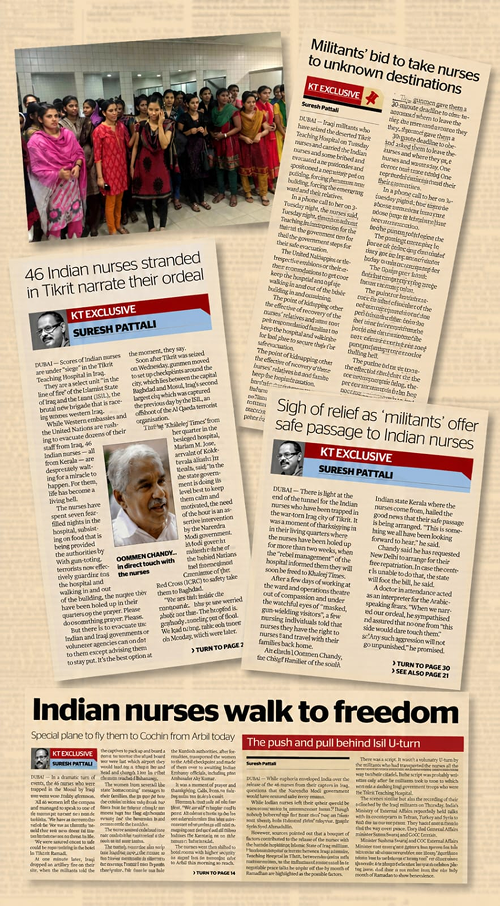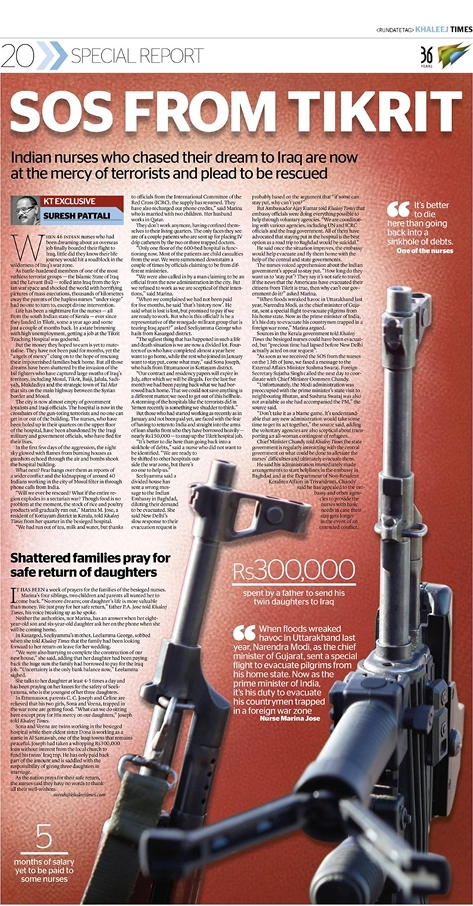
This was a journey I undertook without the pretence of being a detached scribe. It was a constant tug-of-war between professional ethics and the instinct to extract every last fragment of information from a vulnerable source.
In 2014, while international journalists and major television networks were still groping in the dark, I managed to break through the barricades of terror and establish a “hotline” with a key source among the 46 Indian nurses held captive by the Islamic State at Tikrit Teaching Hospital in Iraq.
It was a painful dilemma — calling people trapped in a war zone, knowing that each conversation could expose them to danger.
While India’s Ministry of External Affairs reassured the press in New Delhi that the nurses were safe, my reports told a different story. Day after day, I chronicled the anguish of the shell-shocked captives. My dispatches became a barometer of their emotions, their fears, and even their most basic daily needs.
Sleep eluded me. Their trust in me was so absolute that they began calling whenever they were in distress. Through the crackling phone line, I could hear bombs exploding near their compound, their cries of despair, and their whispered prayers.
I knew what was on their dinner plates, how many days they had survived on biscuits, and how many kilos of rice remained in their stores. They lived on a razor’s edge, forced at gunpoint to treat injured militants. They wept, and I listened. I consoled them, sent prayers, and stayed with them in spirit.
In time, I was no longer merely a reporter — I had become one among them, sharing their confinement through stories of war. It was overwhelming.
Then came the call that chilled me. Armed militants had ordered them onto a bus bound for the unknown. My source, Marina Joseph, called to say that it might be her last.
“I am leaving. I’ve kept an SMS ready for you. If they take us, we will press send before they snatch our phones.” War had already forged Marina into a woman of steel. Midway to Mosul, aboard a bus controlled by militants, she sent a brief message: “All is fine.”
She cautioned me not to call. What followed was a night of complete silence — perhaps the most agonising stretch of the entire ordeal. The next day, hounded relentlessly by television channels for updates, I gathered the courage to call her. We spoke briefly — about their surroundings, the room in which they were being held, and even the food they had been given during Ramadan.
Then came the words everyone had been waiting for: “We are probably on our way to freedom.” “Please keep me in your prayers,” she said before hanging up.
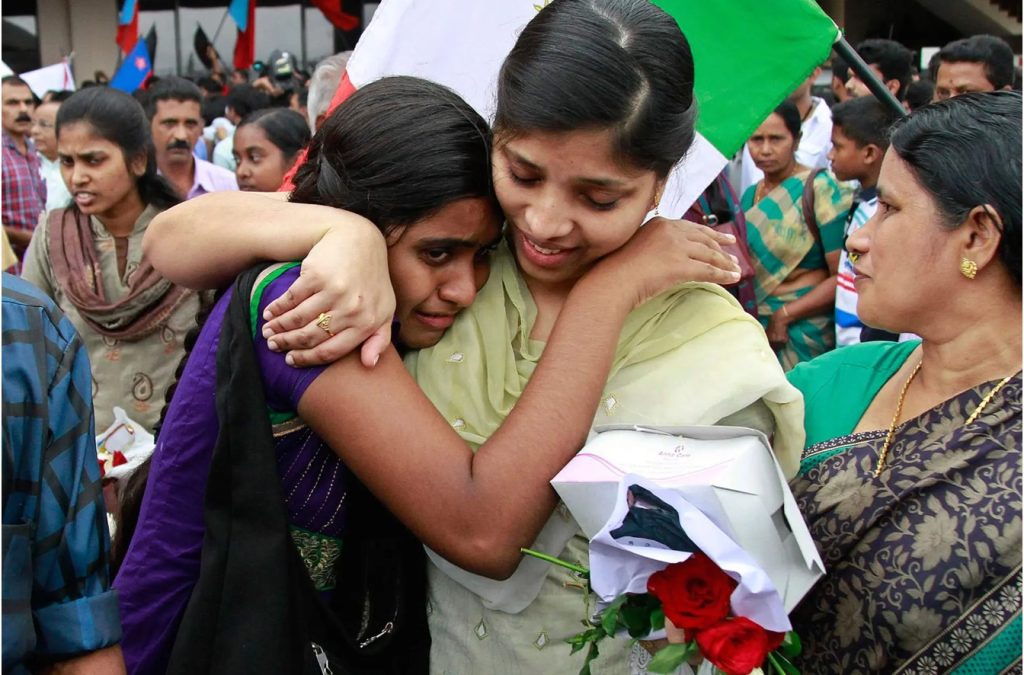
Soon after, the floodgates of emotion opened as the nurses crossed the Irbil checkpoint to safety. “This is a second birth,” she said, her voice trembling.
When the rescued nurses returned home, the then chief minister, Oommen Chandy, called me personally. “This would not have been possible without you. Thank you so much.”